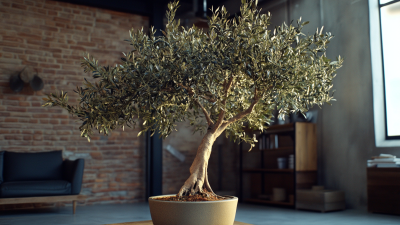
China Top Large Artificial Olive Tree Manufacturers?
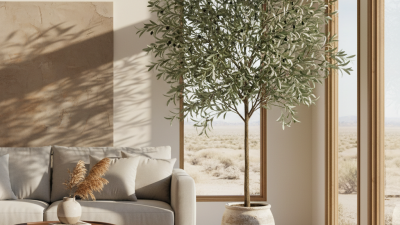
China Top Large Artificial Olive Tree Manufacturers? This question matters as hotels, restaurants, offices, and retailers seek Mediterranean character without irrigation, pruning, or seasonal leaf loss. The phrase Artificial Olive Tree Large usually describes trees above two metres, often built with reinforced trunks, UV-treated foliage, weighted planters, and dense canopies. Buyers should examine more than photographs. Leaf color, branch spacing, trunk texture, pot stability, packaging, and replacement policies reveal manufacturing quality.
Grand View Research estimates that the global artificial plants market reached approximately USD 1.67 billion in 2023, with continued growth expected through 2030. Technavio also identifies commercial interiors, hospitality projects, and online distribution as important demand areas. These reports do not isolate large artificial olive trees. That limitation matters. Data remains uneven. Still, the broader market indicates rising interest in durable, maintenance-light botanical décor.
Julie Burch, founder of Afloral, has described the appeal of faux botanicals as “bringing the beauty of nature indoors without the maintenance.” Her observation helps explain why large olive trees remain popular in busy interiors. However, realism is not automatic. Poorly shaped crowns can look repetitive, while glossy leaves may appear plastic under strong lighting. China’s leading manufacturers increasingly address these weaknesses through hand-adjusted branches, molded natural textures, flame-retardant options, and project-specific customization. This guide examines manufacturers through product engineering, export experience, material transparency, production capacity, and after-sales support. Price alone is not enough. A beautiful sample can still fail during shipping.
Types of Large Artificial Olive Trees Made in China
Types of Large Artificial Olive Trees Made in China
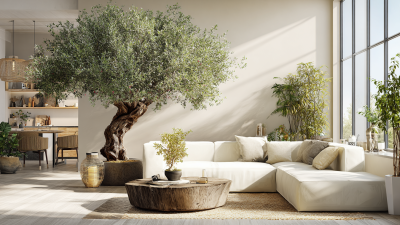
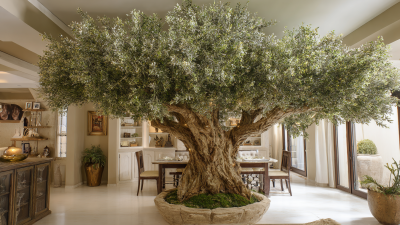
Chinese manufacturers commonly produce four large artificial olive tree types: single-trunk, multi-trunk, potted, and custom landscape models. Single-trunk trees suit hotel entrances and narrow corridors. Multi-trunk designs create a fuller Mediterranean appearance. Most indoor models use PE or PVC leaves, while premium versions add silk-textured foliage and hand-shaped branches. Heights usually range from 1.5 to 4 meters.
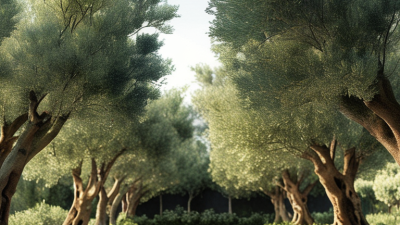
Outdoor trees need different construction. Manufacturers may combine UV-resistant leaves, galvanized steel cores, cement-filled bases, and weather-resistant trunks. Some models use natural wood trunks, which provide convincing cracks and irregular grain. Others use molded fiberglass or polyurethane trunks for consistent sizing. The second option is easier to repeat, but it can look too perfect.
Mordor Intelligence’s 2025 artificial flowers market assessment estimates global sales at about USD 1.4 billion, with continued growth through 2030. Grand View Research also identifies commercial interiors and hospitality as important demand areas. These figures do not measure artificial olive trees alone. That limitation matters. Buyers should request leaf-count specifications, UV test results, base-weight details, and close photographs before ordering. A 3-meter tree may appear impressive online but feel unstable in a real lobby. Sample inspection remains essential.
China Top Large Artificial Olive Tree Manufacturers: Types of Large Artificial Olive Trees Made in China
Chinese manufacturers commonly produce large artificial olive trees in several formats for hotels, shopping malls, offices, restaurants, event venues, and outdoor landscaping. The chart shows typical product height ranges used in wholesale specifications; final dimensions depend on the trunk structure, pot, foliage density, and customization requirements.
The height ranges represent common large artificial olive tree specifications: indoor potted models are generally more compact, while multi-trunk and UV-resistant outdoor models are manufactured in taller sizes for commercial landscaping.
Key Features of China’s Artificial Olive Tree Manufacturers
China’s commercial olive tree manufacturers often combine commercial scale with flexible production. Many workshops offer trees for hotels, offices, restaurants, and outdoor terraces. Their main strength is customization. Buyers can request different heights, trunk shapes, leaf density, pot sizes, and color tones.
Experienced manufacturers usually use PE or fabric leaves, steel or fiberglass trunks, and weighted bases. Outdoor models may include UV-resistant coatings and weatherproof pots. These details matter in strong sunlight, where cheap leaves can fade quickly. Ask for material specifications, not only attractive catalog photographs. A reliable supplier should provide samples, production photos, inspection records, and clear packaging information. Factory audits and third-party testing can also reduce uncertainty.
Quality control is another key feature. Skilled teams check branch attachment, trunk stability, leaf distribution, and surface finish before shipment. Some manufacturers support small trial orders, which helps buyers compare real products. Yet factory claims are not always consistent with delivered quality. A perfect sample may hide weak packaging or uneven assembly in bulk production. Request a pre-shipment inspection and confirm acceptable tolerances in writing. Clear communication about climate, installation space, and maintenance expectations usually produces a more suitable artificial olive tree. malembe
Materials and Production Methods Used for Realistic Olive Trees
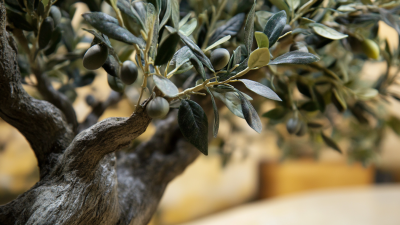
China’s leading artificial olive tree manufacturers focus on materials that balance realism, strength, and manageable cost. High-quality trees often use galvanized steel or reinforced fiberglass trunks. These materials resist bending during shipping and installation. Some trunks receive a textured coating that imitates aged olive bark. The surface should feel uneven, not artificially smooth.
Leaves are commonly made from UV-resistant polyester, polyethylene, or blended synthetic fabric. Polyester can provide fine vein details and soft movement. Polyethylene usually offers better moisture resistance. Manufacturers may apply several green shades, including dusty silver and muted yellow. Real olive foliage is rarely one color. That small variation makes a major difference.
Production usually begins with a metal frame and hand-shaped branches. Workers attach leaves in irregular clusters rather than repeating identical patterns. Molds can create consistent olives, but hand finishing often improves their natural appearance. I have found that overly perfect spacing looks decorative instead of botanical. Factory quality checks should examine leaf attachment, trunk stability, odor, color fading, and fire-safety documentation where required. Sample testing under strong light is useful. Outdoor performance remains difficult to predict. Even a convincing showroom model may lose color after prolonged sun exposure. Manufacturers should provide material specifications, maintenance guidance, and realistic service expectations. Mistakes still happen. Careful buyers should inspect a full sample, not only photographs.
How to Evaluate and Compare Chinese Olive Tree Suppliers
How to Evaluate and Compare Chinese Olive Tree Suppliers
Demand for realistic artificial greenery continues to expand. Grand View Research estimates the global artificial plants market reached about USD 1.4 billion in 2023. Its report also forecasts steady growth through 2030. This supports careful supplier screening, not rushed purchasing. Large Chinese manufacturers should provide factory addresses, production capacity, export experience, and traceable material records. A polished website is not enough.
Request a physical sample before comparing quotations. Check trunk stability, leaf density, pot dimensions, color consistency, and visible seams. Measure the sample against the approved specification. Ask for UV-resistance, flame-performance, and material test reports from recognized laboratories. ISO 9001 certification can indicate controlled procedures, but it does not guarantee product quality. Audit the factory, or appoint an independent inspection agency. Video tours are useful, yet limited.
Compare total landed cost, not only unit price. Include packaging, mold charges, inspection fees, shipping, and replacement terms. UN Comtrade data shows substantial international trade in artificial foliage under HS 6702, confirming the category’s global supply activity. Still, classification data cannot prove supplier reliability. Ask for three recent commercial references and verify delivery records. I would distrust unusually low prices. They often hide thinner trunks, weaker bases, or inconsistent leaves. My own evaluation would also include a small trial order, because photographs rarely reveal long-term color fading.
Applications and Customization Options for Large Artificial Olive Trees
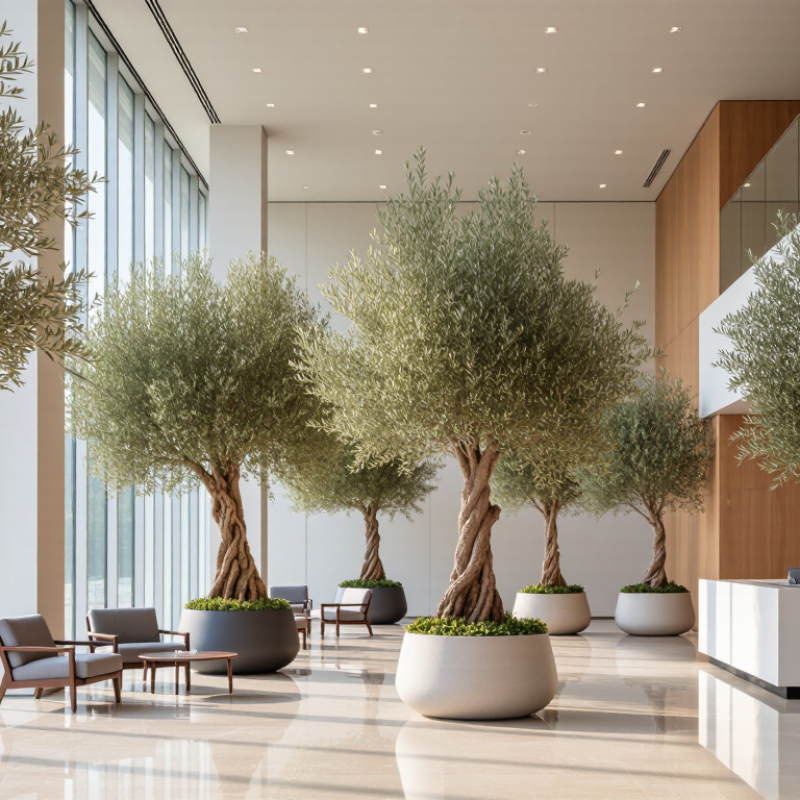
Large artificial olive trees are increasingly used in hotels, shopping centers, offices, restaurants, and residential developments. Their sculptural trunks create a Mediterranean atmosphere without demanding sunlight or irrigation. In busy lobbies, they can separate seating areas while preserving an open view. In restaurants, smaller canopies work well beside entrances, counters, or window seats.
Experienced Chinese manufacturers usually offer customization from the trunk upward. Buyers can specify overall height, canopy width, leaf density, trunk color, and branch direction. A 3.5-meter tree may suit a lobby, while a 2-meter model fits a private dining room. Base options include decorative ceramic pots, lightweight fiberglass containers, and hidden steel frames. For outdoor use, UV-resistant foliage, reinforced branches, and secure anchoring are important. Fire-performance documentation may also be required by a project’s local regulations.
Reliable production should involve drawings, material samples, and a pre-shipment inspection. Photos alone can hide uneven foliage or an unstable base. Ask for sample leaves under real lighting. Color differences happen. Dust also collects on dense canopies, so accessible branches simplify cleaning. I have found that overly perfect trees sometimes look less convincing than designs with varied leaf tones and slightly irregular branches. Customization needs restraint. Too many leaves can make a narrow space feel crowded, and a glossy trunk may appear artificial under bright lights. Clear measurements and installation guidance help prevent costly corrections.