Leave Your Message
- Phone
- E-mail
- Whatsapp
- Whatsapp

Fake Flowers In Bulk give event planners, retailers, and decorators a practical way to build consistent displays without relying on fresh blooms. The best choice depends on where the flowers will be used, how close guests will stand, and how often arrangements need to be handled. A silk rose can add soft, layered petals to a wedding centerpiece; a sturdy faux eucalyptus stem may work better in a shop display that gets moved each morning. Small details matter. Leaf shape, stem flexibility, color variation, and visible seams all affect how convincing a finished arrangement looks.
This guide explores popular bulk options, including roses, peonies, hydrangeas, tulips, and greenery. It also considers material, finish, stem length, and packing quality, so buyers can compare products beyond price alone. Some artificial flowers look convincing from across a room but less natural up close. That distinction is easy to miss in product photos.
No source article or verified expert quotation was provided, so I can’t responsibly attribute a statement to a named industry expert. A sourced quote would strengthen this introduction; inventing one would weaken its reliability. The sections ahead focus on practical selection criteria and the trade-offs buyers should check before placing a large order.
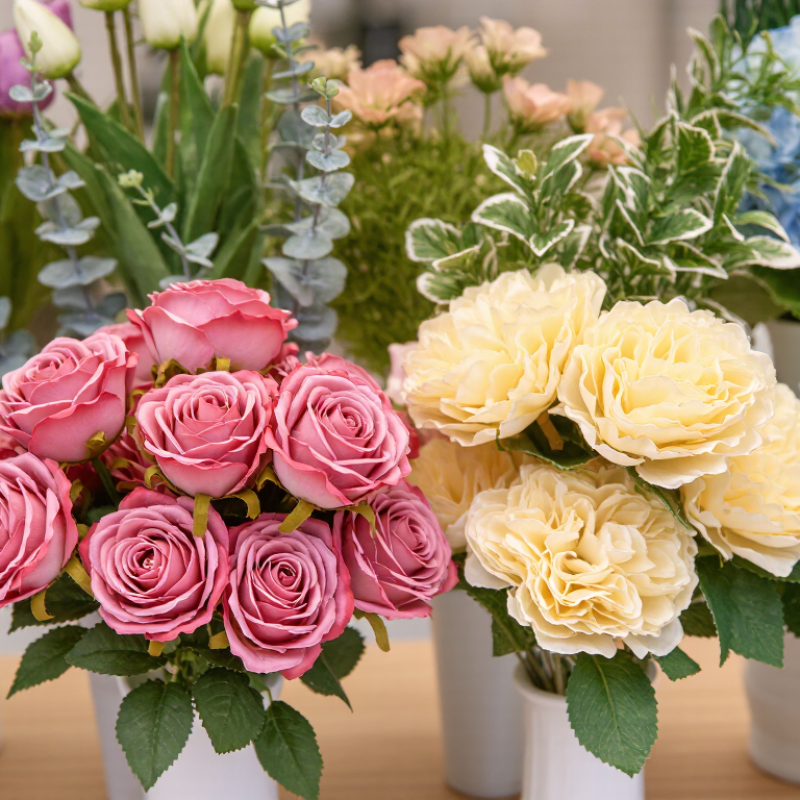
Silk and polyester flowers are popular bulk choices because they combine lifelike detail with practical versatility. In artificial-flower listings, “silk” often describes a soft, fabric-like finish; many such blooms are made from polyester rather than natural silk. Polyester petals can hold crisp edges and saturated color, while finer fabric textures help soften the look. Check leaves, stems, and petal undersides too. A convincing rose may still look artificial if its plastic stem shines under bright light.
The Textile Exchange Materials Market Report 2024 estimates that polyester represented 57% of global fiber production in 2023. This is a broad textile-market figure, not a statistic specific to fake flowers, but it reflects polyester’s extensive availability. For bulk buyers, that can mean more color and style options. It does not guarantee consistent quality between shipments.
Tips: Request samples from the actual production batch. Compare petal color in daylight, bend a stem, and check whether petals flatten after packing. Keep one sample for later order checks. Small differences happen, and they can be easy to miss in a catalog.
Compare popular artificial flower types by appearance, material, care needs, and common arrangement uses.
| Flower Type | Common Material | Appearance and Realism | Durability and Care | Typical Uses | Bulk Buying Considerations |
|---|---|---|---|---|---|
| Roses | Polyester fabric, silk-like fabric, or molded materials | Layered petals and varied colors create a familiar, romantic look; realistic details vary by construction. | Keep out of prolonged direct sunlight to help reduce fading. Dust gently or use a soft brush. | Weddings, table centerpieces, bouquets, and everyday home décor | Check stem length, bloom size, and color consistency across cartons; mixed stages of bloom can add visual variety. |
| Hydrangeas | Polyester fabric or silk-like fabric | Large clusters of small florets provide fullness and a soft, abundant appearance. | Florets can collect dust, so gentle cleaning is preferable to vigorous handling. | Statement centerpieces, ceremony décor, and large floral displays | Compare head diameter and fullness, since these affect how many stems are needed per arrangement. |
| Peonies | Polyester fabric, silk-like fabric, or fabric-and-plastic combinations | Rounded, layered blooms can look lush; petal shape and shading influence perceived realism. | Store blooms without crushing them and reshape petals carefully after unpacking. | Bridal bouquets, seasonal displays, and decorative vases | Review bloom dimensions and packaging method to estimate storage space and reduce petal creasing. |
| Tulips | Polyester fabric or molded plastic with fabric petals | Simple cup-shaped blooms offer a clean, recognizable silhouette; flexible stems can help create natural-looking groupings. | Wipe smooth stems with a damp cloth when appropriate; avoid heat that may deform plastic parts. | Spring arrangements, event décor, and minimalist displays | Check stem flexibility, overall height, and whether the assortment includes open and closed blooms. |
| Orchids | Polyester fabric, silk-like fabric, or molded components | Distinctive petals and patterned centers can look convincing when details and color transitions are carefully made. | Handle delicate petals gently and clean with a soft, dry cloth or brush. | Reception areas, contemporary interiors, and tall arrangements | Confirm stem length, flower count per stem, and support requirements for the intended container. |
| Daisies | Polyester fabric or molded plastic | Open petals and prominent centers create a bright, casual look that works well in mixed bunches. | Generally easy to dust; avoid storing under heavy objects that can flatten petals. | Casual bouquets, craft projects, and cheerful event arrangements | Compare flower-head size and stem count per bunch to plan coverage for larger projects. |
| Eucalyptus and leafy greenery | Plastic, polyester fabric, or mixed materials | Leaf shape, color variation, and stem branching determine how natural the foliage appears. | Dust periodically; keep fabric leaves dry and away from extended direct sunlight. | Filler foliage, garlands, bouquets, and backdrop installations | Check branch length, leaf density, and whether stems can be trimmed or shaped for different designs. |
| Mixed flower bunches | Usually a combination of polyester fabric, silk-like fabric, and plastic parts | Different flower shapes and foliage create a varied look; realism depends on color balance and component quality. | Care requirements depend on the materials included; follow the most delicate component’s care needs. | Ready-made bouquets, retail displays, and quick event styling | Ask for the flower list, stem count, dimensions, and color assortment to ensure each batch meets the project plan. |
Material names such as “silk” are often used broadly in the artificial-flower trade; check the product specification for the actual fiber and construction.