How to Choose Artificial Lotus Flowers for Decoration
Choosing Artificial Lotus Flowers For Decoration requires more than matching a color to a room. The right arrangement should reflect the space, lighting, and emotional atmosphere. A glossy lotus may brighten a dark entryway, while a muted ivory flower can soften a bedroom shelf. Small details matter. Look closely at the petals, stem finish, and center structure.
Floral stylist Lena Hart says, “A convincing artificial lotus should feel calm before it feels perfect.” Her advice highlights an often-missed point: realism is not only about appearance. It also involves proportion, texture, and placement. A flower with overly shiny petals may look artificial under direct sunlight. A stem that bends too easily may appear unstable in a tall glass vase. Check these weaknesses before buying.
This guide explores how to choose lotus flowers for homes, events, offices, and hospitality settings. It considers material quality, petal shape, color balance, vase compatibility, and cleaning needs. Silk, polyester, and coated fabric each create different visual effects. Some flowers photograph beautifully but appear flat in person. That difference deserves attention.
Do not assume the largest bloom creates the strongest display. Sometimes, three modest flowers look more natural than one oversized centerpiece. An imperfect arrangement can even feel more believable. Still, careless mixing may create visual noise. Use nearby shades, varied heights, and enough open space between blooms.
The best Artificial Lotus Flowers For Decoration should support the room, not dominate it. With careful observation, practical testing, and a willingness to reconsider first impressions, you can build a display that feels intentional, durable, and quietly convincing.
Define Display Scale: 15–30 cm Blooms and 30–60 cm Stems
Choosing artificial lotus flowers begins with display scale.
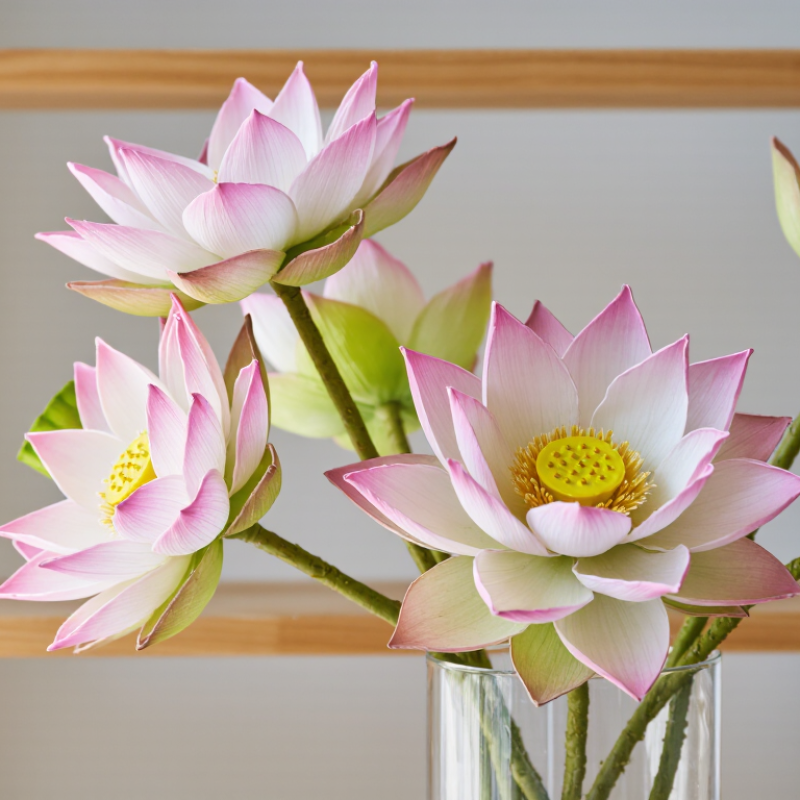
Blooms between 15 and 30 cm wide create a visible focal point without overwhelming most tables. Stems between 30 and 60 cm suit medium vases, entryway bowls, and shelf arrangements. Measure the vase before shopping. A tall vase can hide short stems, while a shallow container may make long stems look unstable.
I usually place the vase on the intended surface first. Then I hold a paper flower at different heights to test the visual balance. For a dining table, 15–20 cm blooms often preserve conversation space. Larger 25–30 cm blooms work better in corners or on sideboards. Keep the total arrangement about one and a half times the vase height. This proportion is not a strict rule, but it rarely looks careless.
Stem flexibility also matters. Bendable stems allow the flowers to open at slightly different angles, making the display feel less manufactured. Look for layered petals, firm centers, and leaves that do not shine unnaturally under direct light. I once chose beautiful oversized blooms for a narrow shelf, and the arrangement felt crowded within minutes. That mistake still influences my measurements. In smaller rooms, fewer flowers usually create stronger impact. Leave some empty space. It gives each lotus room to breathe.
Compare Silk, PE, and PVC by Texture, Durability, and Cost per Stem
When choosing artificial lotus flowers, inspect the petals under natural light. Silk offers the softest texture and the most convincing folds. Its fabric surface catches light gently, like a real petal after morning dew. However, silk can collect dust and lose color near sunny windows. I once selected silk for a bright display and underestimated fading.
PE petals feel smoother and slightly springy. Their molded veins can look remarkably realistic when the finish is matte. PE also handles humidity better, making it practical for bathrooms, covered balconies, and event displays. PVC feels firmer and more plastic-like, especially along the petal edges. It usually resists water and repeated handling well, but strong shine can reveal its artificial quality.
Cost per stem varies with size, layering, wiring, and shipping. In many markets, silk is the highest-priced option, PE sits in the middle, and PVC costs the least. A useful comparison is price divided by expected years of use. For a short indoor arrangement, low-cost PVC may be sensible. For a reception table viewed closely, PE often offers better texture for the money. Check one loose stem before ordering many. Small color differences are easy to miss online. Even careful comparisons can fail when indoor lighting changes the petals’ appearance.
How to Choose Artificial Lotus Flowers for Decoration - Compare Silk, PE, and PVC by Texture, Durability, and Cost per Stem
Typical characteristics and retail price ranges for unbranded artificial lotus stems. Prices are approximate USD ranges and vary by size, finish, quantity, and seller.
| Material |
Texture and Appearance |
Typical Durability |
Water and Moisture Resistance |
Typical Cost per Stem |
Best Use |
| Silk |
Soft, fabric-like petals with a natural drape and subtle color variation. Usually the most realistic under indoor lighting. |
Moderate. Petals can crease, fray, fade, or collect dust if handled frequently or exposed to sunlight. |
Low to moderate. Avoid soaking; moisture may stain fabric petals or affect glued components. |
$3.00–$10.00 |
Indoor centerpieces, weddings, hospitality displays, and settings where realism is the priority. |
| PE (Polyethylene) |
Slightly molded or waxy feel with firm petals. Textured PE can reproduce veins and natural curves convincingly. |
High. Resists tearing and keeps its shape well; prolonged ultraviolet exposure can gradually cause fading or brittleness. |
High. Suitable for humid areas and occasional outdoor use when the product includes UV-resistant treatment. |
$2.50–$8.00 |
Long-term displays, humid rooms, event installations, and protected outdoor arrangements. |
| PVC (Polyvinyl Chloride) |
Smooth, flexible, and often slightly glossy. Lower-cost versions may look more uniform or synthetic than silk or textured PE. |
Moderate to high. Handles frequent movement well, but heat may deform thin parts and sunlight can cause discoloration over time. |
High. Easy to wipe clean and generally suitable for damp environments; avoid prolonged heat and direct sun. |
$1.50–$5.00 |
Budget-conscious displays, retail styling, temporary events, and easy-clean indoor arrangements. |
Choose Silk
Select silk when a soft, realistic surface and premium indoor appearance matter more than moisture resistance.
Choose PE
Select PE when you need a durable, natural-looking flower for humid spaces or repeated use.
Choose PVC
Select PVC when low cost, wipe-clean maintenance, and shape retention are the main priorities.
Note: “Silk” in artificial-flower listings can refer to polyester or another synthetic textile rather than natural silk. For outdoor placement, check the product’s UV-resistance specification because material alone does not guarantee long-term color stability.
Assess UV Resistance with ISO 4892-3 Exposure-Test Criteria
How to Choose Artificial Lotus Flowers for Decoration
Assess UV Resistance with ISO 4892-3 Exposure-Test Criteria
Artificial lotus flowers often sit near windows, conservatories, and outdoor water features. Sunlight can slowly bleach petals, weaken stems, and make leaves brittle. Check the material before choosing a decorative arrangement. Polyester fabric, molded plastic, and coated foam may react differently under ultraviolet exposure.
Ask for test information based on ISO 4892-3. This standard describes fluorescent UV exposure equipment and controlled conditions. It may include irradiance, lamp type, temperature, condensation, water spray, and exposure cycles. The standard does not automatically define an acceptable color-change limit. That limit should be stated separately. A useful report should identify the tested material, exposure duration, and observed changes.
Look closely at the test details. Compare photographs taken before and after exposure. Check for fading, cracking, curling, surface powder, and loose color transfer. A lotus flower that keeps its shape but loses its pink tone may still fail your design needs. Ask whether the test used complete flowers or flat material samples. That difference matters. A small sample can perform better than a finished flower with glued layers and thin edges.
Be practical. Place a sample beside the intended window for several weeks. Rotate it occasionally. This is not a substitute for laboratory testing, but it reveals real reflections and heat buildup. I would also inspect the stem connection, often overlooked. A polished test report helps, yet it cannot remove every uncertainty. Temperature, dust, and installation angle may change the result.
Verify Safety Through ASTM E84 Ratings and Non-Toxic Color Standards
When choosing artificial lotus flowers, inspect more than color and petal shape. Safety begins with the material beneath the finish. Ask for an ASTM E84 test report covering the actual petals, stems, foam, fabric, or backing used in production. ASTM E84 measures flame spread and smoke developed under controlled conditions. It does not prove that a flower is non-toxic or safe in every setting.
A Class A result generally indicates a flame-spread index of 0–25 and a smoke-developed index of 0–450. Still, ratings can change when materials are combined. Confirm the report identifies the tested assembly, not only a similar plastic sample. Check the laboratory, test date, and product description. Decorative flowers placed near lamps or ceiling fixtures need extra distance. Heat can alter flexible coatings.
Color safety deserves separate verification. “Non-toxic color” is not a complete technical standard by itself. Request declarations or test results for heavy metals, restricted plasticizers, and unwanted solvent residues. Water-based color may reduce odor, but it does not automatically prove chemical safety. A slightly dull petal may be preferable to a bright finish with poor documentation. I once treated a vivid color as a quality signal; that assumption was weak. Also inspect for flaking pigment, sharp wire ends, and strong odors after unpacking. Fresh air helps, but ventilation cannot replace credible material records.
How to Choose Artificial Lotus Flowers for Decoration
Use the ASTM E84 flame-spread classification as a material-screening reference. Class A materials have a Flame Spread Index of 0–25, Class B has 26–75, and Class C has 76–200. The Smoke Developed Index limit commonly referenced for these classifications is 450 or below. ASTM E84 does not certify colorant toxicity, so request separate chemical-compliance documentation for dyes and coatings.
Selection guidance: Prefer artificial lotus flowers made with materials documented as ASTM E84 Class A when fire performance is important. For color safety, verify the applicable non-toxic or restricted-substance requirements for the intended market rather than relying on color appearance alone.