Exterior Artificial Plants are moving beyond hotel lobbies and shaded balconies. They now appear beside restaurant entrances, pool decks, office courtyards, and coastal terraces. Grand View Research reports continued growth in the global artificial plants market, supported by demand for low-maintenance decorative greenery. Its market analysis also identifies commercial spaces and hospitality settings as important application areas. However, broad market reports often combine indoor and outdoor products. Their figures require careful interpretation.
Climate remains the real design test. Strong sunlight can fade plastic leaves. Salt air can corrode metal stems. Wind can expose lightweight planters or scatter loose foliage across paving. The American Society of Landscape Architects has repeatedly reported strong consumer interest in outdoor living spaces. This trend creates opportunities for Exterior Artificial Plants, especially where irrigation is difficult or seasonal color is unreliable. Yet artificial greenery cannot cool air, support pollinators, or improve soil. That limitation should not be hidden.
Biophilic-design authority Stephen R. Kellert described biophilic design as “the practice of connecting people and nature within the built environment.” His principle offers useful guidance here. Artificial plants should support a natural-looking setting, not imitate a botanical garden perfectly. This guide examines ten options for hot, humid, dry, cold, windy, and coastal climates. Each selection considers UV resistance, drainage, anchoring, cleaning, and visual realism. Expect practical compromises. The most convincing installation may still show dust after a storm. That is manageable, not magical. Placement, maintenance, and honest material choices often matter more than a high price tag.
Outdoor artificial plants should match exposure, not just appearance. The World Meteorological Organization reported that 2023 reached about 1.45°C above the pre-industrial average. Heat, stronger sunlight, and sudden storms can stress outdoor materials. In the United States, NOAA recorded 28 billion-dollar weather and climate disasters in 2023. Climate volatility now matters during plant selection.
For hot, sunny patios, choose UV-treated leaves with dense pigments and flexible stems. Pale plastic can fade quickly against a south-facing wall. In humid regions, use sealed pots and drainage openings to reduce trapped moisture. Coastal homes need rust-resistant frames because salt air attacks untreated metal. Windy locations benefit from weighted containers and low, broad foliage. Dry climates still need dust-resistant surfaces. Dust settles between leaf veins.
Cold areas require flexible materials that resist cracking during freeze-thaw cycles. Snow should not sit on narrow branches for weeks. In wet climates, inspect joints and pot bases after heavy rain. The U.S. Climate Normals from NOAA help compare local temperature and precipitation patterns before buying.
I have seen attractive plants fail because their containers were too light. That was avoidable. Product labels often mention UV resistance, but testing conditions differ. Ask how long protection was tested, and treat vague claims carefully. No artificial plant is completely maintenance-free; occasional washing, anchoring, and inspection remain necessary.
Top 10 Exterior Artificial Plants for Every Climate
For hot, dry climates, exterior artificial plants must withstand intense sunlight, heat, dust, and sudden wind. UV-resistant leaves are essential because ordinary plastic can fade, crack, or become brittle within one summer. No material is truly fade-proof. Shade still matters.
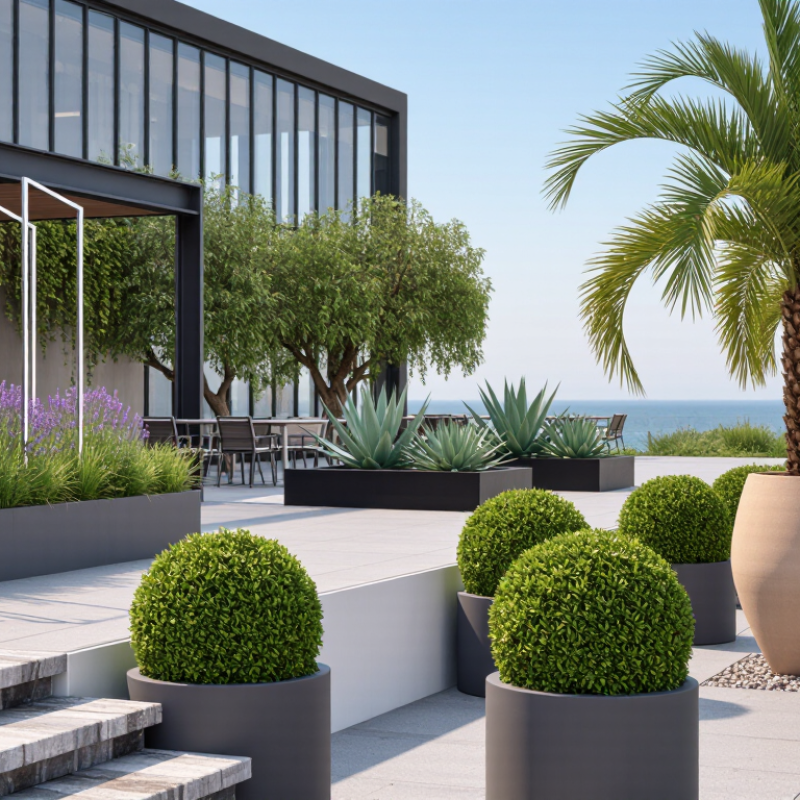
Choose plants with dense foliage and realistic color variation. Olive-style trees, agave forms, ornamental grasses, palms, and compact succulents often suit dry patios. Their muted greens and silvery tones look natural beside stone, stucco, and sun-baked concrete. Avoid overly glossy leaves. They can appear artificial under strong midday light.
Weight the containers carefully. A tall plant may look stable, yet a gust can tip a lightweight pot. I prefer broad bases, internal supports, and weather-resistant filler beneath the visible soil layer. Dust arrives quickly. Wipe leaves with a soft, damp cloth every few weeks, especially near unpaved areas. Inspect stems after severe heat or wind, since small cracks can spread unnoticed. Keeping plants under a covered entry or beside a shaded wall can extend their useful appearance. Still, placement is not always perfect; a plant that looks convincing in the store may seem too bright against pale walls. Testing one piece outdoors for several days helps reveal that problem before building a full arrangement.
| Rank | Artificial Plant Style | Natural Inspiration | Recommended Height | Sun Exposure | Heat Suitability | Best Outdoor Use | Care and Installation Notes |
|---|---|---|---|---|---|---|---|
| 1 | Agave Accent Plant | Agave with rigid, architectural leaves | 45–90 cm | Full sun | Excellent | Patios, pool surrounds, entry planters, and gravel gardens | Choose UV-stabilized foliage and a weighted planter; dust the leaves periodically. |
| 2 | Column Cactus | Saguaro or organ-pipe cactus forms | 90–210 cm | Full sun | Excellent | Modern courtyards, commercial entrances, and rooftop terraces | Secure tall versions against wind and use a pot with a broad, stable base. |
| 3 | Aloe Vera-Style Plant | Aloe with thick, pointed, fleshy leaves | 30–75 cm | Full sun to partial shade | Excellent | Small balconies, window ledges, and tabletop outdoor displays | Ideal where space is limited; protect lightweight pots from strong gusts. |
| 4 | Yucca Plant | Yucca with sword-shaped leaves | 90–180 cm | Full sun to partial shade | Very good | Doorways, office courtyards, and sheltered outdoor seating areas | Use a UV-resistant trunk and foliage; wipe narrow leaves with a soft, dry cloth. |
| 5 | Bird of Paradise | Strelitzia with broad tropical leaves | 120–210 cm | Bright sun to partial shade | Good | Covered patios, resort-style terraces, and poolside areas | Place in a sheltered location because broad leaves can catch wind; select fade-resistant leaves. |
| 6 | Olive Tree | Olive with narrow gray-green leaves | 120–240 cm | Full sun | Very good | Mediterranean-style patios, restaurants, and outdoor dining spaces | A weighted planter improves stability; gray-green leaves help conceal light dust between cleanings. |
| 7 | Bougainvillea Arrangement | Bougainvillea with colorful paper-like bracts | 90–180 cm | Full sun | Good | Balcony screens, pergolas, walls, and colorful entry displays | Select UV-stabilized bracts; anchor the container and keep the arrangement away from constant abrasion. |
| 8 | Ponytail Palm | Beaucarnea with a bulbous trunk and long leaves | 75–150 cm | Bright sun to partial shade | Good | Contemporary patios, covered balconies, and minimalist planters | A compact silhouette suits narrow spaces; use a weighted base in exposed locations. |
| 9 | Boxwood Globe | Evergreen boxwood shaped as a rounded topiary | 45–90 cm | Full sun to partial shade | Good | Formal entrances, pathway edges, and symmetrical container displays | Dense foliage hides the interior frame; rotate containers occasionally for even weathering. |
| 10 | Hanging Eucalyptus | Eucalyptus with rounded, blue-green leaves | 60–120 cm | Bright indirect to partial sun | Moderate | Covered porches, shaded pergolas, and sheltered wall baskets | Best under cover; suspend securely and avoid locations with continuous harsh afternoon sun. |
Selection note: Outdoor performance depends on UV-stabilized materials, local heat intensity, wind exposure, and installation quality. Product height ranges are typical decorative sizes, not fixed standards; always follow the care and exposure guidance supplied with the specific item.
Top 10 Exterior Artificial Plants for Every Climate
Rainy and humid climates demand more than attractive artificial foliage. They require drainage, UV stability, and careful airflow. A 2024 Grand View Research report valued the global artificial plants market at about USD 1.3 billion in 2023, with continued growth expected through 2030. That expansion reflects broader outdoor use, but product quality still varies widely.
For wet patios, choose exterior artificial palms, ferns, boxwood, bamboo, grasses, and broad-leaf tropical plants. Select polyethylene or solution-dyed polyester leaves with UV-resistant coatings. Avoid tightly packed foliage. Water trapped inside dense branches can encourage mildew and unpleasant odors. Use weighted pots with drainage holes, raised feet, and coarse gravel beneath the arrangement. Small details matter.
Keep plants away from constantly dripping gutters. Wipe leaves monthly with clean water, then let them dry fully. The U.S. Environmental Protection Agency recommends indoor relative humidity below 60% to reduce mold growth; outdoor installations face even more moisture and airflow changes. That comparison is imperfect, but useful. Inspect seams, stems, and pot interiors after heavy storms. Replace faded or brittle sections early. A shaded corner may protect color, yet excessive shade can slow drying. I have found that “weatherproof” rarely means maintenance-free. Examine the label, test the drainage, and adjust placement after the first rainy season.
For frost-prone gardens, the best exterior artificial plants imitate hardy evergreens. The USDA Plant Hardiness Zone Map, updated in 2023, uses 30 years of winter temperature data. It divides areas by 10°F temperature steps. Choose realistic boxwood, cedar, juniper, pine, spruce, cypress, eucalyptus, olive, fern, and ornamental grass designs. Evergreen forms usually look convincing beneath snow.
NOAA’s 1991–2020 Climate Normals show that freeze frequency varies sharply between nearby regions. A sheltered porch may protect foliage, while an exposed balcony receives freezing wind and repeated ice. Select polyethylene or UV-stabilized materials, weighted pots, and flexible stems. ASTM G154 testing can help evaluate accelerated weathering, but it cannot predict every local winter. Cold changes that choice. A brittle leaf can crack during simple handling.
Place boxwood and cedar near entrances, where their dense shapes remain visible after frost. Use pine and spruce in large containers for stronger winter silhouettes. Eucalyptus and olive suit milder cold zones, but they may appear less believable under heavy snow. Ferns and ornamental grasses work best beneath covered patios. Secure tall arrangements against gusts, and keep drainage holes open. I would not assume “all-weather” means freeze-proof. Test one first, then inspect faded leaves, split seams, and loose stems after the first hard freeze.
Cold-hardiness reference for popular plant styles used in outdoor artificial arrangements. A lower USDA zone indicates that the living counterpart naturally tolerates colder conditions.
How to read this chart: The zone values refer to typical living counterparts and are useful for choosing realistic winter foliage. Artificial plants do not have biological hardiness limits, but their foliage, coatings, adhesives, pots, and weighted bases should be rated for outdoor UV exposure, moisture, freezing temperatures, and repeated freeze-thaw cycles.
How to Compare, Install, and Maintain Artificial Plants Outdoors
Choosing outdoor artificial plants requires more than matching colors. Compare UV resistance, drainage, wind stability, temperature tolerance, and material quality. Boxwood, topiary, bamboo, palms, ferns, ornamental grasses, ivy, succulents, flowering shrubs, and moss panels suit different settings. Palms and bamboo create a warm look, while succulents and grasses usually handle dry conditions better. Ferns and moss panels look convincing in shaded, humid areas. They may fade faster in strong sunlight.
Check the product’s UV rating and inspect the leaves closely. Dense foliage should hide the central stem and feel flexible, not brittle. I have found that heavy pots perform better on exposed balconies. Add gravel inside the base, then use a stable planter and exterior-grade anchors. Do not rely on appearance alone. Strong wind can move a surprisingly large arrangement.
Installation should leave space between foliage and walls, allowing air to circulate. In freezing climates, protect fragile pots from repeated expansion and contraction. In wet climates, clear blocked drainage holes monthly. Wipe dust from leaves with a soft cloth and mild soapy water. Avoid harsh cleaners; they can weaken color and coatings. Inspect seams, stems, and anchor points after storms. I once ignored a loose bracket, and one panel leaned noticeably within a week. Artificial plants need less care, not no care. My maintenance schedule still needs improvement during busy seasons.