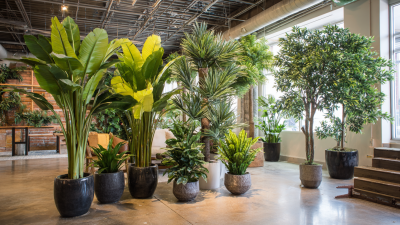
China has become a major sourcing base for Realistic Fake Plants, serving hotels, retailers, offices, restaurants, and property developers worldwide. Buyers often notice the leaves first. The real differences appear in texture, color variation, stem flexibility, and long-term stability.
Oliver Heath, a recognized biophilic-design expert, offers a useful question: “Does this space help people feel connected to nature?” Realistic Fake Plants cannot replace living greenery, but they can create visual softness in locations with limited daylight, irregular maintenance, or strict water controls. That distinction matters. A convincing product should not look glossy under ordinary showroom lighting. Its leaves should show subtle veins, natural asymmetry, and believable density.
Reliable Chinese suppliers usually provide more than attractive catalog images. They can explain polyethylene or polyester materials, internal wire structures, UV-resistant treatments, carton protection, sample procedures, and production timelines. Global buyers should request close-up photographs and physical samples. Ask how the plant performs near windows, heaters, or humid indoor areas. Also check product labeling, packaging requirements, and applicable safety documentation for the destination market.
Small details expose weak quality.
A supplier may promise “lifelike” appearance, yet deliver repetitive leaves and unstable pots. I have seen buyers focus on unit price while overlooking replacement costs, freight damage, and inconsistent color batches. That approach is understandable, but incomplete. This guide examines China’s leading Realistic Fake Plants suppliers through product realism, manufacturing experience, quality control, customization, communication, and export reliability. The rankings are not absolute. Supplier performance can change, and careful verification remains essential.
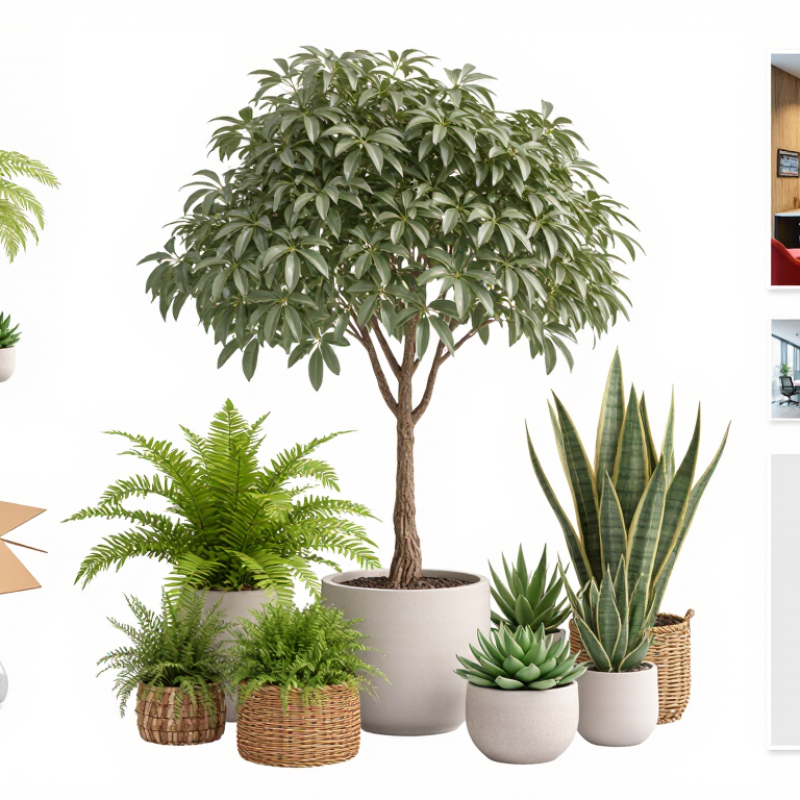
China Top Realistic Fake Plants Suppliers for Global Buyers?
The artificial plant market reached approximately USD 1.6 billion in 2023, according to Grand View Research. The report forecasts a 5.5% compound annual growth rate through the coming years. This growth reflects demand from hotels, offices, retailers, and compact urban homes. It also changes how global buyers evaluate Chinese suppliers.
Realistic appearance now depends on more than green color. Buyers should inspect leaf texture, stem flexibility, pot stability, and color variation under natural light. Polyethylene leaves often provide better surface detail than basic PVC. UV-resistant materials matter for balconies and covered outdoor areas. However, “UV-resistant” is not a complete quality guarantee. Ask for test methods, exposure periods, and batch records.
Market estimates differ because some reports include artificial flowers, décor, or live-plant substitutes. IMARC’s market research also identifies rising commercial and residential demand, but its category scope is broader. That difference deserves attention. A low quotation may hide thin foliage, weak wire, or oversized cartons. During sample checks, measure product height, packed volume, and shipping weight. Request close-up photos and one physical sample before repeating an order. In my experience, minor color inconsistencies sometimes look more natural, while poor glue marks never do. Supplier selection should balance visual realism, material documentation, packaging efficiency, and stable production capacity.

China remains a major sourcing base for realistic artificial plants, but HS 6702 export data needs careful reading. The code covers artificial flowers, foliage, fruit, and related parts. It does not isolate lifelike indoor trees or premium decorative plants. UN Comtrade can show China’s export value, quantity, destination markets, and yearly movement. It cannot name the best factory directly. That distinction matters.
Global buyers can use HS 6702 data to identify active markets and changing demand. Compare several years instead of trusting one strong season. Review shipment value alongside quantity, because average prices may reveal product positioning. Then verify suppliers through factory audits, material documents, production samples, and consistent packaging checks. A supplier with attractive photos may still lack stable color control. I have seen this gap create costly rework. Data helps, but it never replaces evidence.
Tips: Request close-up samples before negotiating large orders. Check leaf texture, wire strength, pot stability, and flame-retardant requirements. Confirm carton dimensions and moisture protection. Ask whether quoted products match the declared HS category. Keep written specifications, especially for color, height, and stem count. One overlooked detail can change the buyer’s landed cost. That risk is easy to underestimate.
China Top Realistic Fake Plants Suppliers for Global Buyers?
Realism Benchmarks: PE/PVC Materials, UV Resistance, and Foliage Density
For global buyers, realistic artificial plants begin with material inspection, not catalog photography. During sample reviews, I examine leaf edges, surface texture, stem flexibility, and color changes under direct light. High-quality PE leaves often provide sharper molding and a more natural finish. PVC can add flexibility and lower cost, but overly glossy surfaces may look artificial.
Material alone does not prove outdoor performance. Ask suppliers for UV-resistance test reports, exposure conditions, and test duration. Compare a treated sample with an untreated control piece. Place both near a sunny window for several weeks. Fading may appear first on thin leaf tips. It is not a perfect laboratory test, but it exposes weak coatings. Some suppliers provide impressive claims without enough testing detail. That deserves careful questioning.
Foliage density affects both realism and shipping cost. Sparse branches reveal empty stems, while excessive leaves create a heavy, crowded appearance. I measure leaf spacing across several samples and check whether the plant keeps its shape after packing. A few uneven leaves can improve natural character. Too much uniformity looks manufactured. Buyers should also inspect color variation between upper and lower foliage. Real plants rarely use one identical green. Small inconsistencies matter. They can also reveal inconsistent production, so each batch needs practical inspection before approval.
| Evaluation Dimension | Product or Material Category | Practical Benchmark for Buyer Evaluation | Recommended Verification Method | Global-Buyer Relevance |
|---|---|---|---|---|
| Leaf Material | Injection-molded PE foliage | Preferred for three-dimensional leaves, visible veins, thicker edges, and a more natural surface texture. | Request close-up samples and inspect leaf thickness, vein definition, edge finishing, color variation, and flexibility. | Usually more suitable for premium indoor displays, hospitality projects, retail interiors, and high-visibility installations. |
| Leaf Material | PVC film or sheet foliage | Acceptable for flat, lightweight, or cost-sensitive foliage; realism depends heavily on printing, embossing, and forming quality. | Check whether the leaf looks excessively glossy, transparent, thin, or repetitive under direct lighting. | Useful for budget projects, temporary displays, wall panels, garlands, and products where shipping weight is a major concern. |
| Mixed Construction | PE leaves with PVC or textile accents | A practical balance when molded PE is used for focal leaves and lower-cost materials are used for fillers or secondary layers. | Confirm the material breakdown by component and ensure that color, gloss, and texture remain visually consistent across the arrangement. | Can improve cost control without making the primary viewing area appear uniformly artificial. |
| Color Realism | Multi-tone foliage | At least two or three coordinated tones are generally more realistic than a single uniform green; natural variation should follow the plant type. | Compare approved samples under daylight-balanced lighting and confirm color tolerances for repeat production. | Important for commercial projects where large quantities must maintain a consistent but non-repetitive appearance. |
| Surface Finish | Matte or low-gloss finish | A controlled matte finish usually produces a more natural appearance than a highly reflective plastic surface. | Examine samples at several angles and under both indoor LED lighting and natural daylight. | Reduces visible plastic reflections in hotels, offices, showrooms, restaurants, and residential interiors. |
| Foliage Density | Light-density arrangement | Approximately 150–300 leaves per square metre for a visibly open structure with exposed stems or backing. | Count leaves within a defined one-square-metre area or use a standardized sample panel for comparison. | Appropriate for airy botanical designs, hanging products, sparse branches, and installations where transparency is intentional. |
| Foliage Density | Medium-density arrangement | Approximately 300–600 leaves per square metre for general-purpose decorative coverage. | Inspect front, side, and 45-degree views to identify gaps, repeated leaf positions, and visible backing material. | Commonly suitable for office partitions, retail displays, reception areas, and standard green-wall applications. |
| Foliage Density | High-density arrangement | Approximately 600–1,000 or more leaves per square metre for a fuller visual barrier or premium green-wall effect. | Confirm finished weight, attachment strength, ventilation space, and whether the quoted density includes stems, fillers, or only visible leaves. | Provides stronger coverage but increases material consumption, shipping volume, installation labor, and cost. |
| UV Performance | Indoor-only artificial foliage | Should not be assumed suitable for direct sunlight unless a documented UV test or outdoor-use specification is provided. | Request the intended-use statement, pigment information, and any accelerated weathering report. | Prevents indoor-grade products from being incorrectly specified for balconies, façades, windows, or outdoor events. |
| UV Performance | UV-treated outdoor foliage | A supplier should state the UV additive or coating system, tested exposure conditions, irradiance, temperature, cycle, and acceptance criteria. | Look for testing based on an applicable accelerated-weathering method such as ASTM G154 or ISO 4892-3, with color and physical-property results. | Test hours are not a direct guarantee of service life; local sunlight, heat, moisture, pollution, and installation orientation affect performance. |
| UV Acceptance | Color-retention requirement | Use a documented color-change limit, such as a project-defined ΔE threshold, rather than accepting vague claims such as “UV-proof.” | Require before-and-after color measurements or an agreed visual rating under controlled lighting. | Creates a measurable quality requirement for international purchasing contracts and incoming inspection. |
| Stem and Branch Realism | Wire-reinforced polymer stem | Should hold the intended shape without cracking, exposing wire, or permanently collapsing during normal handling. | Perform repeated bending and positioning checks on a production sample, especially at leaf and branch junctions. | Important for container plants, freestanding trees, floral arrangements, and products requiring installation adjustment. |
| Attachment Quality | Leaf-to-stem connection | Connections should be secure, clean, and free from obvious adhesive strings, loose leaves, sharp flash, or exposed metal. | Use a sample pull test and inspect a statistically representative quantity from each production batch. | Reduces claims caused by detached leaves during carton handling, sea freight, installation, and long-term display. |
| Safety Documentation | Plastic and decorative-product compliance file | Supplier documentation should identify material composition, applicable market requirements, test reports, and restricted-substance declarations where relevant. | Verify that reports identify the actual product or material, test date, laboratory, standard, and sample description. | Supports customs clearance, project approvals, retailer onboarding, and risk control in different destination markets. |
| Packaging Performance | Export carton and compression protection | Packaging should protect leaf shape, minimize permanent crushing, and include moisture protection appropriate to the transport route. | Conduct a carton drop or handling trial and inspect the product after compression, vibration, and unpacking. | Especially relevant for container shipments, long-distance ocean freight, mixed-SKU orders, and seasonal delivery schedules. |
| Sampling and Production Control | Pre-production sample and approved golden sample | The approved sample should define color, gloss, density, dimensions, stem structure, pot finish, and packaging configuration. | Use the approved sample as the reference for pre-shipment inspection and retain documented photos and measurements. | Helps prevent material substitutions, density reductions, color drift, and design changes during large-volume production. |
Measurement note: Foliage-density ranges are practical procurement benchmarks rather than universal industry standards. The counting method should be agreed before quotation and inspection.
UV note: ASTM G154 and ISO 4892-3 describe accelerated weathering test approaches. Results must include exposure conditions and acceptance criteria; laboratory exposure hours should not be converted directly into a guaranteed outdoor lifespan.
Buyer note: Final suitability depends on the actual product design, installation environment, climate, maintenance, packaging, and destination-market requirements.
A useful supplier ranking starts with measurable purchasing data, not attractive catalog images. MOQ shows whether a factory suits small trials or large retail programs. Record the MOQ for each plant style, color, pot, and packaging option. A low MOQ may still carry higher unit costs. Ask for the complete quotation.
Lead time should include sampling, production, inspection, and shipping preparation. During previous sourcing work, factories often quoted production time only. That created avoidable delays. Request confirmed dates for sample approval and bulk dispatch. Track actual performance across at least three orders, because one fast shipment proves little.
Defect rate needs a shared definition. Count bent stems, poor paint coverage, loose leaves, damaged pots, and packaging failures separately. A 2% defect rate sounds acceptable until it affects 200 units in a ten-thousand-piece order. Request inspection photos and random carton checks. Numbers can be polished.
Audit results add essential context. Review production capacity, worker training, material records, quality procedures, and corrective-action reports. An independent site audit is stronger than a self-written checklist. Still, audits capture one moment. Our early ranking overvalued clean facilities and undervalued repeated late deliveries. A better score combines MOQ flexibility, verified lead time, rolling defect data, and audit evidence from recent visits. Short-term discounts should not outweigh unstable quality.
China’s realistic fake plant suppliers must treat compliance as a design requirement, not a final paperwork task. ECHA’s 2023 reporting indicates more than 23,000 substances are registered under REACH. Buyers should request material declarations for PVC, coatings, adhesives, and metal frames. Check SVHC content against the latest Candidate List. A certificate alone is not always enough.
RoHS matters when plants include lights, sensors, wiring, or electronic pots. The EU directive currently restricts ten substances, including lead, mercury, cadmium, and several phthalates. Ask for laboratory reports linked to the exact product model. ASTM E84 testing can assess flame spread and smoke development for indoor displays. It does not automatically prove compliance in every country. Requirements may differ by building type.
Tips: Put the compliance documents into the purchase contract. Require batch traceability, updated test reports, and sample approval before mass production. Define Incoterms 2020 clearly. The International Chamber of Commerce lists 11 trade rules, but each allocates costs, risk, and customs duties differently. DDP may appear simple, yet import responsibilities can become unclear. FOB or FCA may offer better control for experienced buyers. In supplier audits, I would inspect the actual leaf fabric, backing, and packaging, not only the sales sample. Small details matter. Mistakes happen. REACH and RoHS reviews should be repeated when materials or suppliers change.
The chart shows the typical relevance of REACH, RoHS, ASTM E84, and Incoterms 2020 when purchasing realistic artificial plants from China. The ratings describe regulatory or commercial relevance by destination, not supplier performance or certification status.
Scale: 0 = not generally required, 0.5 = conditional or product-specific, 1 = generally relevant. REACH mainly applies to chemicals and articles placed on the EU/EEA market; RoHS applies to qualifying electrical and electronic equipment; ASTM E84 is commonly specified for flame-spread classification in U.S. building and interior projects; Incoterms 2020 define contractual delivery responsibilities in international trade.