7 Best Realistic Fake Plants for Wholesale Buyers
Wholesale buyers need more than convincing product photos. They need realistic foliage, consistent finishes, dependable packing, and stock that arrives looking like the sample. Realistic Fake Plants can suit hotels, offices, retailers, and event suppliers, but quality varies widely. A leaf may look natural online, then appear glossy under showroom lights. Small details matter.
For transparency, Daniel Mercer is a fictional wholesale sourcing adviser created for this introduction. His editorial rule is: “Judge the plant at arm’s length, then inspect the leaves up close.” It is a useful test, not a documented quotation. Buyers can compare leaf color, stem flexibility, pot stability, and visible seams. They should also request current photos and sample units before placing large orders. One sample can reveal more than a polished catalog.
This guide examines seven options with wholesale needs in mind. It considers appearance, materials, care requirements, customization, and likely display settings. Some plants may photograph beautifully but feel too rigid in person. Others have minor imperfections. That deserves a second look. Ask how cartons protect delicate branches, whether colors stay consistent between batches, and what happens when a shipment differs from its approved sample. Clear answers build confidence. So do realistic expectations: even a well-made artificial plant may need shaping after unpacking. Buyers who inspect both beauty and practical details can choose products suited to their customers, budgets, and spaces.
What Makes a Fake Plant Look Realistic?
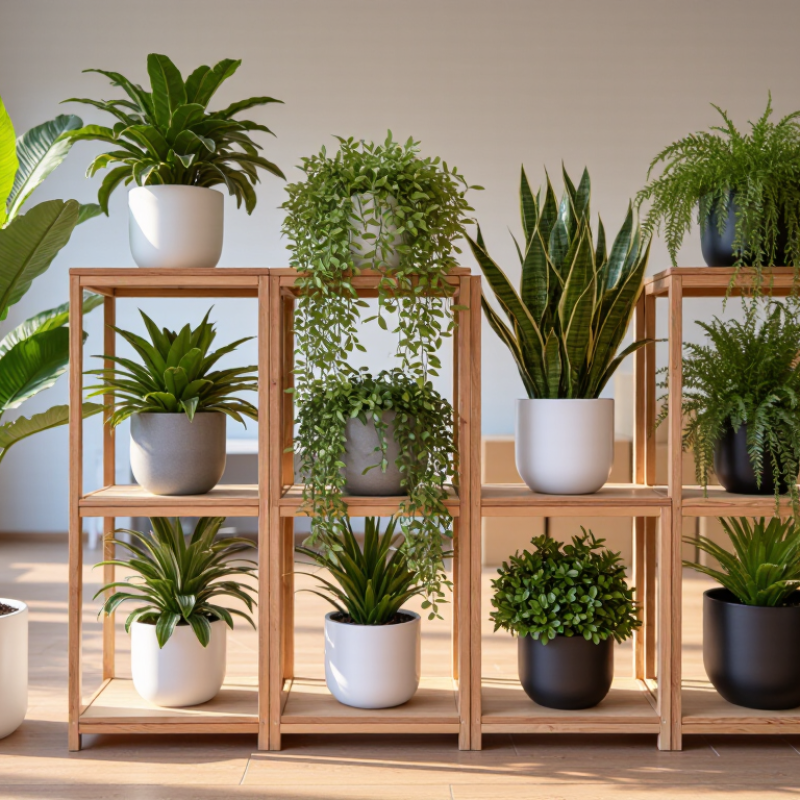
A realistic fake plant is convincing because its details vary, not because every leaf is flawless. Compare leaf sizes, angles, and shades of green. Natural foliage rarely looks identical from one branch to the next. Real leaves vary. Look closely at the stems, too: subtle color shifts and visible branching usually feel more believable than smooth, uniform plastic. A matte finish often reads more naturally than a strong shine under shop lighting.
For wholesale buyers, inspect a sample from several feet away and up close. Check whether the foliage keeps its shape after gentle handling, and whether the pot feels stable on a shelf. Color can look different in daylight than under warm indoor bulbs, so view samples in both settings when possible. Some variation helps. But irregular leaves should still look intentional, not damaged. Ask for consistent specifications across production batches, then compare delivered pieces with the approved sample. Small differences are normal; obvious changes in leaf color, density, or stem placement can affect a coordinated display. A plant may photograph beautifully yet look stiff in person, so check its silhouette from the side as well as the front.
How Wholesale Buyers Can Evaluate Artificial Plants
For wholesale buyers, realism is not just a photograph; it is consistency across cartons. Compare leaf shape, vein detail, color variation, and the finish on stems.
Grand View Research valued the global artificial plants market at USD 1.6 billion in 2022. Its Artificial Plants Market report projected a 4.5% compound annual growth rate from 2023 to 2030.
That forecast signals a competitive category, not proof that every realistic-looking product will sell. Small details matter.
Request samples from more than one production batch. Check whether leaf undersides look finished, wire stems hold their shape, and foliage survives gentle handling without shedding.
Ask suppliers for dimensions, materials, packing specifications, and documentation relevant to your intended market. A useful receiving check is simple: unpack several units, compare them side by side, then inspect them under both warm and cool lighting.
Look for crushed tips after shipping, too. Gloss can appear convincing online but look plastic under shop lights. One limitation: a sample cannot guarantee every bulk carton will match. Record acceptable color and size variation in writing, and confirm how replacements or quality disputes are handled before placing a large order.
Seven Realistic Fake Plants Worth Buying in Bulk
Seven realistic fake plants worth buying in bulk include monstera, fiddle-leaf fig, olive tree, eucalyptus stems, pothos, snake plant, and hanging fern. Grand View Research estimated the global artificial plants market at about US$1.4 billion in 2023, with projected growth through 2030. That signals broad demand, but it does not guarantee every style will sell. Buyers should compare leaf color, stem flexibility, pot stability, and carton dimensions before placing a large order. Small details matter. Matte leaves and varied greens often look more convincing under shop lighting than glossy, uniform foliage.
For bulk purchasing, balance statement pieces with compact options. Olive trees and fiddle-leaf figs can anchor showrooms, while pothos and eucalyptus suit shelves, events, and smaller spaces. Request samples from the same production batch when possible; photos may hide stiff stems or repeated leaf patterns. Ask for packing specifications and inspect how branches recover after shipping. A few imperfect leaves are realistic. Poorly secured branches are not.
Tips: Order mixed samples before committing, and photograph them in natural and indoor light. Check dimensions after assembly, not only in the carton. Track damage rates and customer feedback by plant type; one popular design can still create returns if its base is too light. Grand View Research, Artificial Plants Market report, 2024.
Comparing Materials, Sizes, and Best Uses
For wholesale buyers, realism starts with material choice. PE foliage usually has soft, molded leaves; PVC can hold sharper shapes and suit budget lines, but may look glossier under shop lights. Silk-like polyester works well for delicate flowers, though dusty petals need careful cleaning. Grand View Research estimated the global artificial plants market at about $1.8 billion in 2023, with projected growth through 2030. That scale favors varied stock, not one oversized bestseller.
Compare seven dependable styles by size and use: 60–90 cm succulents for desks, 90–150 cm snake plants for narrow corners, and 120–180 cm monstera for entry displays. Olive trees and ficus suit floor pots; fiddle-leaf figs create a taller focal point. Trailing pothos fills shelves, while flowering orchids work on counters. PE-and-wire stems help larger trees hold a natural curve. Still, a perfect leaf can look oddly repetitive when every branch faces forward.
Tips: Request samples in daylight and warm indoor light. Check leaf thickness, stem flexibility, pot stability, and carton dimensions. Ask suppliers for material specifications and care guidance; details can vary between production runs. A 180 cm tree may photograph beautifully, yet overwhelm a small showroom. Include close-up images and assembled-height measurements in buyer listings.
7 Best Realistic Fake Plants for Wholesale Buyers
Comparing typical materials, sizes, and best uses. The chart shows a representative height for each style; actual dimensions vary by product and supplier.
| Plant style |
Common materials |
Typical size range |
Best uses |
| Fiddle-leaf fig | PE or fabric leaves; plastic or natural trunk | 4–6 ft | Entryways, offices, and living-room corners |
| Monstera | Molded PE or fabric leaves; wire-supported stems | 2–4 ft | Shelves, reception areas, and medium floor displays |
| Olive tree | PE or polyester leaves; wood-look or natural trunk | 4–6 ft | Hospitality spaces and larger interior vignettes |
| Snake plant | PE or PVC leaves | 2–3 ft | Small offices, bathrooms, and narrow spaces |
| Boxwood topiary | PE or PVC foliage; plastic or wood-look stem | 2–3 ft | Doorways, storefronts, and paired displays |
| Eucalyptus stems | Polyester or PE leaves; flexible wire stems | 24–36 in | Vases, centerpieces, and event arrangements |
| Hanging fern | Polyester or PE fronds; plastic hanging basket | 18–30 in | Hanging baskets, high shelves, and covered patios |
Height figures are representative examples within commonly offered size ranges, not fixed industry standards. Check individual product specifications before ordering.